24 Jul 2026
Activity Flow Patterns and Their Role in Shaping Incentive Structures for Electronic Poker Events

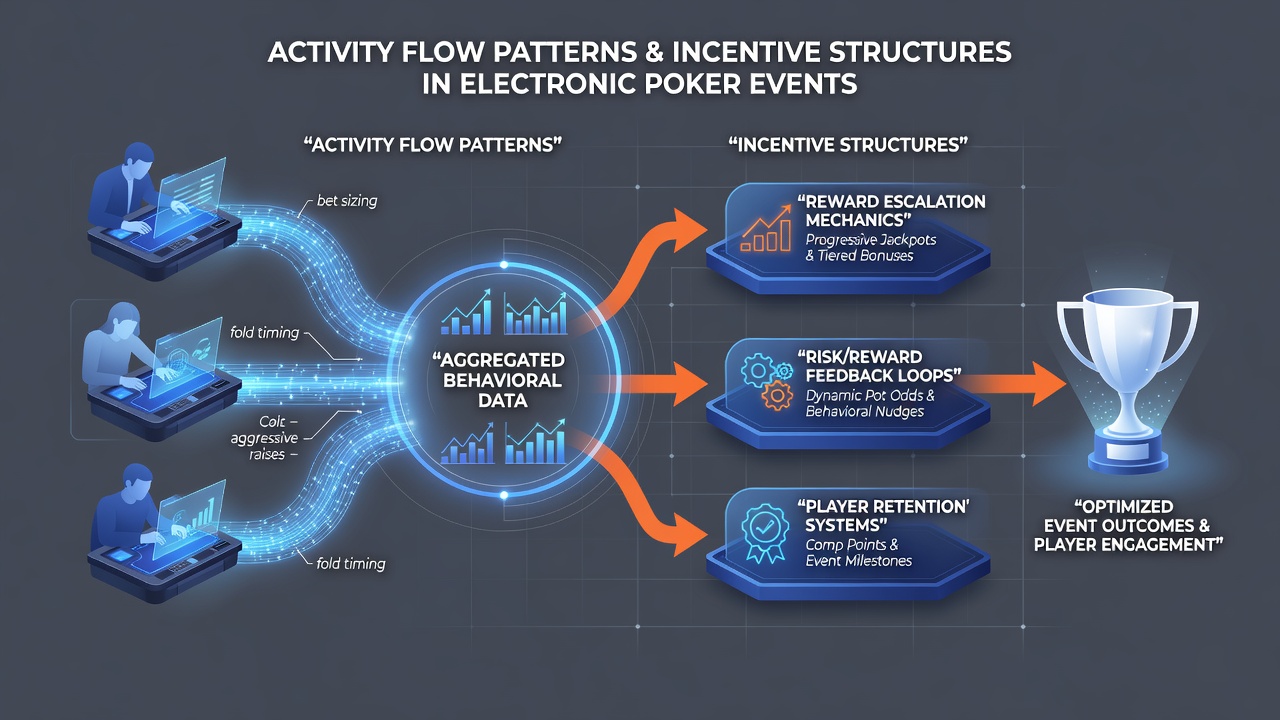
Electronic poker platforms track sequences of player actions such as login frequency, session length, and movement between game types, and these activity flow patterns directly determine how operators design bonus structures and tournament entry incentives. Data collected across multiple platforms shows that players who log in during specific daily windows receive targeted deposit matches while longer session durations unlock escalating reward multipliers, and operators adjust these triggers based on aggregated behavioral metrics.
Mapping Core Components of Activity Flow
Activity flow begins with initial account access and extends through repeated deposit and play cycles, with researchers noting that intervals between logins often correlate with the timing of promotional offers. Platforms record each transition from cash games to tournaments and measure how quickly participants complete registration steps, then apply this information to set eligibility thresholds for jackpot qualifiers. Studies conducted by the International Gaming Institute at the University of Nevada, Las Vegas indicate that peak activity clusters occur between 18:00 and 23:00 local time across North American servers, prompting operators to align bonus release schedules with those windows.
Session duration data reveals distinct clusters where short bursts under thirty minutes receive different incentive layers than extended sessions exceeding two hours, and these distinctions shape re-entry rules in multi-flight events. Operators monitor drop-off points where players exit after losing a set percentage of their stack, then introduce mid-session reload bonuses to maintain flow continuity. Such adjustments maintain consistent participation rates without altering base game rules.
Incentive Design Driven by Observed Patterns
Electronic poker events incorporate pattern-derived incentives through tiered loyalty systems that activate after a player completes a predetermined number of hands within a rolling seven-day period. Figures released by the Canadian Gaming Association demonstrate that platforms using real-time flow analytics achieve higher retention during July 2026 festival periods compared with static bonus models. Reward triggers tied to consecutive daily logins encourage steady engagement while volume-based multipliers reward players who accumulate hands across both mobile and desktop interfaces.
Operators also calibrate tournament structures around flow data by offering satellite entry paths that open during low-traffic hours, thereby redistributing player volume and preventing server congestion. When flow analysis shows rapid exits following large losses, platforms introduce consolation bonuses that activate upon tournament elimination, converting potential churn into continued session activity. These mechanisms rely on precise measurement of entry and exit timestamps rather than subjective player feedback.
Integration with Tournament Scheduling
Tournament calendars incorporate activity flow insights when determining start times and blind structures, with July 2026 schedules showing increased satellite offerings during traditionally quiet morning periods. Platforms examine historical participation curves and place overlay guarantees on events that historically underfill, using the resulting data to refine future incentive allocations. Cross-device tracking further refines these decisions because players who switch between tablet and desktop sessions demonstrate longer overall engagement and therefore qualify for enhanced reward tiers.
Security verification sequences embedded within flow monitoring ensure that incentive eligibility remains tied to verified accounts, reducing instances of duplicate registrations. When verification steps align with natural activity peaks, completion rates remain high and subsequent bonus claims increase proportionally. Industry reports compiled by the Australian Institute of Gambling Research document that synchronized verification and reward timing reduces drop-off during the critical first hour of tournament play.
Regional Variations in Pattern Application
European operators emphasize flow continuity across time zones by adjusting incentive windows to match local peak hours, whereas North American platforms focus on weekend versus weekday distinctions. Data aggregation across these regions shows that players in multi-time-zone events respond more strongly to progressive multipliers that accumulate across several days rather than single-session rewards. Such regional tailoring maintains compliance with local regulatory frameworks while preserving the core relationship between measured activity and incentive delivery.
Conclusion
Activity flow patterns supply the quantitative foundation for incentive structures across electronic poker events, enabling operators to align bonuses, tournament entries, and reward triggers with measurable player behavior. Continued refinement of these systems depends on consistent data collection and analysis that respects regional regulatory boundaries and device-specific usage trends. As platforms expand in July 2026 and beyond, the connection between flow metrics and incentive design remains central to operational planning.