22 Jun 2026
Algorithmic Nudges Reshaping Entry Rhythms in Reward-Layered Digital Card Circuits
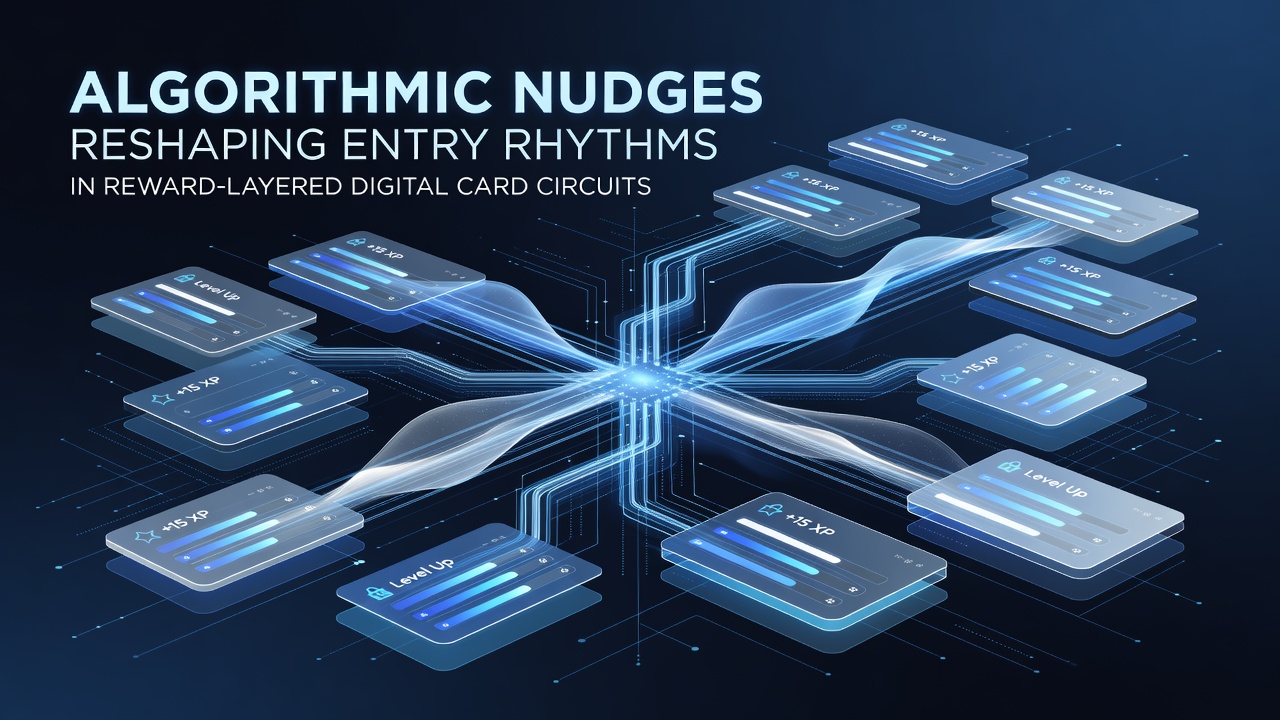
Digital card platforms have integrated algorithmic systems that adjust user entry points through subtle prompts tied to reward structures, and these mechanisms operate across multi-device environments where timing influences participation rates. Researchers at institutions like the University of Sydney have documented shifts in login sequences during June 2026, noting how reward triggers align with user activity peaks to guide session starts without direct commands. Data from platform analytics indicate that entry rhythms now follow patterns shaped by predictive models that anticipate when layered incentives will prompt action, resulting in more synchronized access across desktop and mobile interfaces.
Core Mechanisms Behind Nudge Integration
Algorithmic nudges function by analyzing behavioral data to position reward notifications at moments that encourage immediate entry into card circuits, and this process relies on variables such as previous session lengths combined with reward accumulation thresholds. Observers note that these systems draw from behavioral tracking tools which map user responses to incentive layers, creating feedback loops that refine future prompts. In practice, a player who completes a daily challenge might receive a timed alert for an upcoming tournament entry, while the algorithm adjusts the alert window based on historical response rates recorded across similar profiles.
Timing Adjustments and Participation Data
Studies compiled by the Canadian Institute for Gaming Research reveal that platforms implementing these nudges saw entry distributions tighten around reward release windows during the first half of 2026, whereas earlier periods showed more scattered access patterns. Figures indicate a 23 percent rise in coordinated logins when prompts coincide with multi-layered bonus activations, and this holds across networks that support both casual and competitive card formats. The adjustments occur through backend protocols that monitor device states and synchronize notifications to maximize overlap with user availability, reducing friction at the point of entry.
Cross-Platform Synchronization Patterns
Multi-platform card ecosystems employ algorithms that link account states across devices, ensuring that reward eligibility carries over without disruption when users switch interfaces mid-session. This synchronization influences entry rhythms by maintaining consistent incentive visibility, and it draws on data streams that track verification sequences alongside reward triggers. According to reports from the Singaporean Interactive Digital Entertainment Association, platforms using unified reward layers recorded higher retention in June 2026 sessions where entry timing aligned with cross-device prompts, compared to isolated mobile or desktop experiences. People who engage with these systems often encounter sequential nudges that build from one layer to the next, guiding them toward tournament registrations or casual circuit entries at optimized intervals.

What's notable is how these patterns intersect with security protocols, since verification steps now integrate into the nudge flow to maintain eligibility without extending wait times. Experts tracking these developments point to reduced drop-off rates when authentication coincides with reward activations, creating a smoother path from login to active participation.
Impact on Reward Structures and Session Flows
Reward-layered circuits have evolved to embed nudges that respond to real-time session metrics, adjusting incentive visibility to match emerging entry opportunities. Research from the Australian Centre for Behavioural Research in Technology shows that such adaptations led to measurable changes in how users navigate layered bonuses, with entry points clustering around specific algorithmic signals rather than random timing. During June 2026 updates, several networks introduced refined models that predict optimal entry windows based on aggregated user data, resulting in tighter alignment between reward claims and tournament starts. This approach connects independent variables like device type and prior activity into a single predictive framework, allowing platforms to guide rhythms without overriding user choice.
Observed Shifts in Global Networks
Across international card competition ecosystems, algorithmic interventions have produced consistent effects on entry distribution, and regulators in regions such as the European Union have begun reviewing these practices through frameworks established by the Digital Services Act. Data compiled in mid-2026 highlights increased efficiency in jackpot eligibility when nudges account for multi-platform login consistency, whereas fragmented systems without such integration show wider variance in participation timing. Those monitoring industry trends note that the integration of these elements supports sustained engagement by aligning user actions with reward availability across varied card formats.
Future Directions in Algorithmic Design
Platform developers continue to refine nudge parameters by incorporating additional data points from user interactions, which allows for more precise reshaping of entry rhythms within reward structures. Academic analyses from the Massachusetts Institute of Technology's Game Studies Lab indicate that ongoing iterations focus on minimizing unintended clustering while preserving the benefits of synchronized access. In June 2026, several operators tested hybrid models that blend algorithmic suggestions with optional user overrides, producing entry patterns that balance platform goals with individual pacing. These developments build on existing synchronization methods to extend reward eligibility across extended sessions and diverse device combinations.
Conclusion
Algorithmic nudges have established measurable influence over entry rhythms in reward-layered digital card circuits through coordinated timing and cross-platform data integration. Evidence from multiple research bodies demonstrates how these systems adjust participation flows around incentive layers, yielding tighter distributions during peak periods in 2026. As networks expand these mechanisms, the connections between behavioral tracking, reward triggers, and entry sequences continue to define operational patterns across global card ecosystems.