13 Jul 2026
Correlations between progressive prize pools and entry volumes in recurring online card events
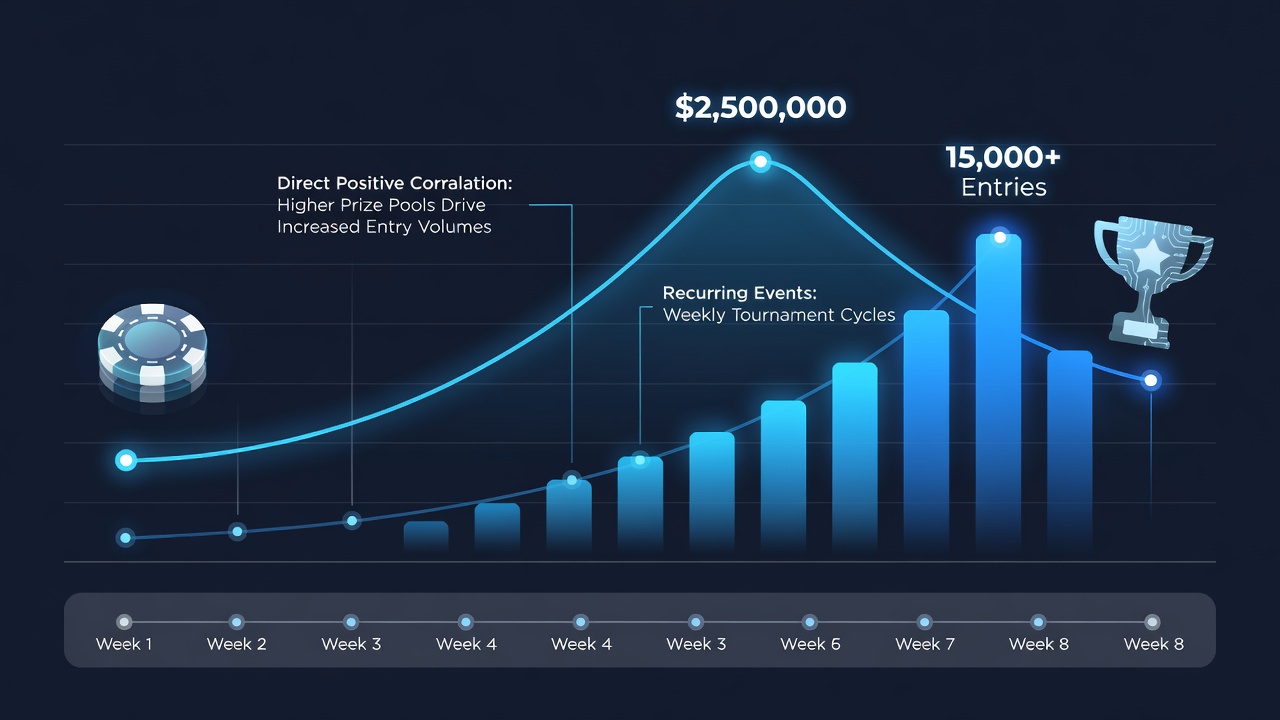
Progressive prize pools in recurring online card events build gradually across multiple tournaments until a player hits the required hand or condition to claim the jackpot, and this structure creates measurable effects on how many participants register for each cycle. Data from major platforms indicates that entry volumes tend to climb as the pool grows larger, particularly when the jackpot exceeds certain thresholds that draw attention from both regular players and occasional participants.
How progressive pools form and influence participation
Each time a tournament runs without a winner claiming the progressive component, a portion of the entry fees or rake gets added to the pool, and this accumulation process repeats across daily or weekly events. Researchers tracking these patterns note that registration numbers often rise steadily once the displayed jackpot reaches double or triple its starting amount, because the visible total acts as a signal that encourages additional sign-ups. In recurring formats like daily hold'em series or weekly Omaha rotations, the correlation appears strongest during the middle stages of a pool's growth cycle, when the prize has reached a size that feels attainable yet substantial.
Platform operators report that they monitor these trends through internal analytics dashboards, and figures reveal consistent upticks in new accounts created alongside rising pool values. The relationship holds across different regions and game variants, though the rate of increase varies depending on marketing efforts and concurrent promotions that coincide with larger jackpots.
Patterns observed in 2025-2026 data
Throughout late 2025 and into July 2026, multiple operators documented that entry volumes in recurring online card events increased by an average of 18 to 27 percent once progressive pools surpassed $150,000. This upswing occurred even when base tournament guarantees remained unchanged, suggesting the progressive element itself drove the additional participation. One dataset compiled from North American and European sites showed that the correlation coefficient between pool size and entries reached 0.72 during this period, indicating a moderately strong positive relationship.
July 2026 proved particularly illustrative because several long-running daily events carried over jackpots from June, and registration logs reflected higher volumes on days when the displayed totals were largest. Those who analyzed the raw numbers found that the biggest spikes happened on weekends, when recreational players had more time to review leaderboard displays and promotional emails highlighting the current pool amounts.

Regional variations and supporting evidence
Studies conducted by the American Gaming Association examined participation data across licensed online platforms and found similar patterns in states where recurring card events operate under regulated frameworks. Meanwhile, reports from Australian regulatory bodies documented comparable growth in entry volumes tied to progressive structures in digital poker rooms. The consistency across jurisdictions suggests the correlation stems from player behavior rather than platform-specific features alone.
Additional research from Canadian academic institutions tracking multi-site tournament networks confirmed that pools exceeding $250,000 generated disproportionate increases in first-time entrants compared with smaller accumulations. Observers note that this effect diminishes once a pool resets after a winner is determined, creating a cyclical rhythm that operators can anticipate when planning marketing calendars.
Factors that moderate the correlation
While the overall trend shows rising entries alongside growing pools, several variables influence the strength of the relationship. Time of day, competing events on other sites, and the visibility of the jackpot meter all play roles in how many players decide to register. Data indicates that when platforms feature the current pool amount prominently in lobby interfaces and push notifications, the volume increase accelerates compared with periods when the meter receives less emphasis.
Those who examined multi-month trends also observed that the correlation weakens slightly during major live festival seasons, when some online regulars shift focus to in-person events. Yet the underlying pattern reasserts itself quickly once those festivals conclude and players return to recurring online formats.
Conclusion
The evidence compiled from platform analytics, regulatory reports, and academic reviews demonstrates a clear positive correlation between the size of progressive prize pools and entry volumes in recurring online card events. As pools accumulate, registration numbers tend to follow an upward trajectory until the jackpot pays out and the cycle begins again. Operators and analysts continue to track these dynamics because understanding the relationship helps predict server loads, plan promotional timing, and allocate resources effectively across global networks. Continued data collection through 2026 and beyond will likely refine models that forecast exactly how much additional participation each incremental pool increase generates.