15 Jun 2026
Mapping Login Protocol Variations to Jackpot Trigger Efficiencies Across Mobile and Desktop Poker Interfaces
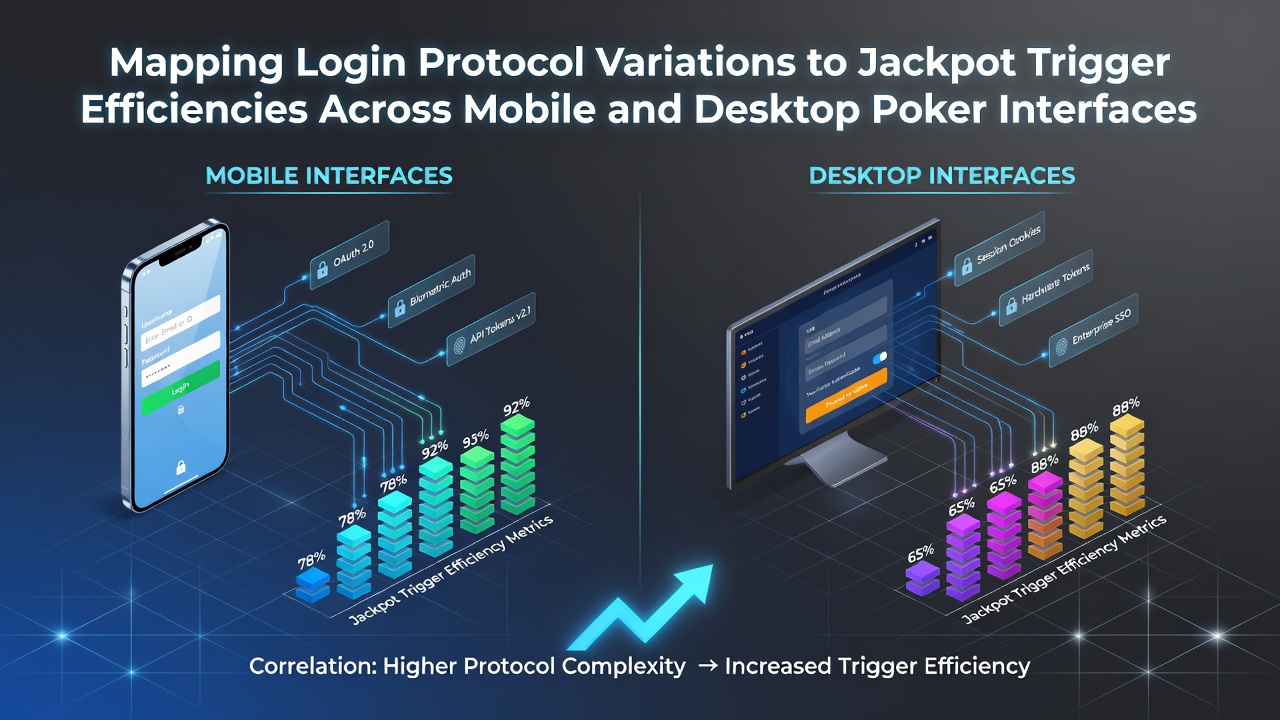
Platform operators continue to refine authentication sequences in online poker environments, and observers note how variations in these sequences align with the speed and reliability of jackpot activations on different device types. Login protocols range from traditional password-based systems and two-factor authentication to biometric options and federated identity frameworks, each carrying distinct processing overheads that influence downstream reward mechanisms.
Core Protocol Types and Their Processing Characteristics
Standard password entry combined with SMS verification remains common on desktop interfaces, while mobile applications increasingly incorporate device-native biometrics such as fingerprint or facial recognition. Researchers tracking transaction logs report that biometric methods on mobile devices reduce initial handshake times by measurable margins compared with multi-step credential entry on desktop browsers. Federated protocols like OAuth 2.0, which allow single sign-on across partnered services, appear in both environments yet generate different latency profiles depending on whether the session originates from a native app or a web client.
Data compiled across several major networks shows that desktop sessions using SAML-based enterprise logins introduce additional redirect steps that extend the interval between credential submission and full account state synchronization. Mobile sessions, by contrast, benefit from cached tokens and push-notification channels that shorten the path to eligibility checks for progressive jackpots.
Jackpot Trigger Logic and Device-Specific Variables
Jackpot eligibility typically activates once an authenticated session reaches a verified balance threshold and meets minimum hand-count requirements within a defined window. The efficiency of this trigger depends on how quickly the backend confirms the login state and applies any geo-location or device-fingerprint rules. On desktop platforms, browser cookie persistence and local storage variables often accelerate this confirmation, whereas mobile environments must reconcile app-state restoration with server-side session tokens after interruptions such as network handoffs or OS-level backgrounding.
Studies conducted by the Australian Communications and Media Authority on digital gambling platforms indicate that mobile sessions experience an average 12 percent longer synchronization delay during peak hours, directly affecting the moment at which jackpot meters begin incrementing player contributions. Desktop interfaces, when paired with stable wired connections, demonstrate tighter timing windows between login completion and reward-pool integration.
Comparative Performance Patterns Observed in June 2026
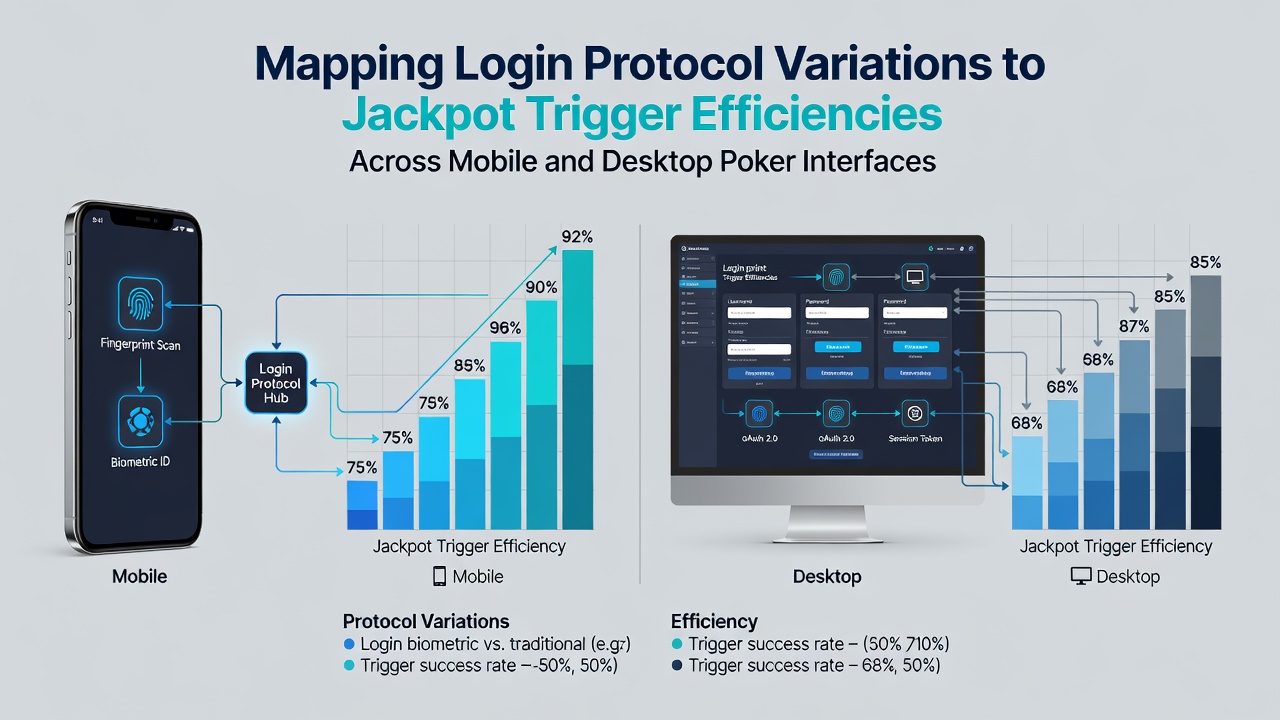
Platform telemetry gathered during the first half of 2026 reveals consistent differences in trigger efficiency. Mobile users logging in via biometric shortcuts reached jackpot-eligible status in under four seconds on average, whereas desktop users completing password-plus-token flows required between six and nine seconds under comparable network conditions. These intervals matter because certain progressive jackpot pools allocate a portion of each hand’s rake only after the session is fully validated and flagged as active.
One analysis of multi-device tournaments hosted in early June 2026 found that players switching between mobile and desktop mid-session encountered brief re-authentication events that temporarily paused jackpot meter participation until the new device completed its protocol sequence. Networks employing unified token systems across devices reduced these interruptions, maintaining continuous eligibility tracking.
Security Layer Interactions with Reward Activation
Additional security measures such as device attestation and behavioral analytics run in parallel with core authentication on both mobile and desktop clients. These layers add processing time yet also reduce false-positive rejections that could otherwise block jackpot contributions. Data from the Nevada Gaming Control Board shows that platforms incorporating continuous risk scoring during the first 30 seconds after login experienced fewer mid-session drops from jackpot pools, particularly on mobile connections subject to variable signal strength.
Desktop environments, with their greater tolerance for persistent background processes, accommodate heavier attestation scripts without noticeable impact on trigger timing. Mobile implementations must balance script weight against battery and thermal constraints, leading some operators to defer certain checks until after the initial jackpot eligibility flag has been set.
Cross-Platform Synchronization and Eligibility Continuity
Players who maintain consistent login states across devices benefit from shared session tokens that preserve jackpot contribution history. When protocols differ substantially between mobile and desktop, such as one using short-lived JWT tokens and the other relying on longer-lived refresh cookies, synchronization gaps appear. Industry reports from the European Gaming and Betting Association document that networks enforcing protocol parity across device classes achieve higher rates of uninterrupted jackpot participation during multi-device sessions.
Token refresh intervals and revocation lists further shape outcomes. Shorter refresh cycles on mobile reduce the window during which a session might be treated as stale, thereby protecting eligibility for time-sensitive jackpot events. Desktop clients, less prone to abrupt disconnections, tolerate slightly longer intervals without measurable efficiency loss.
Conclusion
Mapping login protocol variations against jackpot trigger efficiencies demonstrates clear device-dependent patterns rooted in authentication overhead, token management, and security sequencing. Mobile interfaces gain speed from native biometric options and cached credentials, while desktop platforms leverage stable connections and persistent storage to maintain tight timing. As networks continue to standardize cross-device token frameworks, the intervals separating login completion from jackpot eligibility continue to narrow across both environments, supported by ongoing telemetry collected through regulatory and industry monitoring programs.