10 Jul 2026
Timezone Shifts and Their Effect on Bonus Activation Windows in International Hold'em Platforms
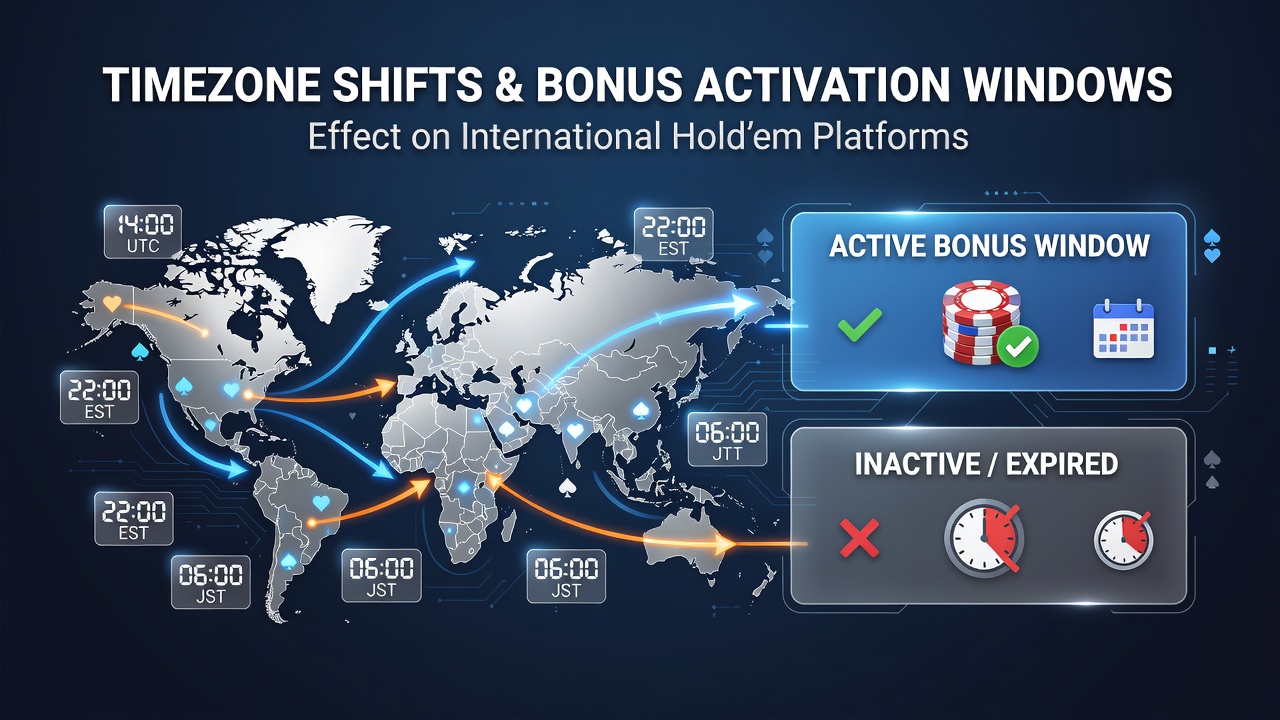
International Hold'em platforms operate across multiple timezones and this creates distinct patterns in how bonus activation windows function for players located in different regions. Servers typically run on coordinated universal time while promotional offers tie activation to specific UTC offsets or local clock times depending on the operator's configuration. Data from platform analytics shows that players in Asia-Pacific zones often encounter shifted windows compared to those in Europe or the Americas because of the 12- to 16-hour differences that separate these areas during standard operation periods.
How Platforms Anchor Bonus Triggers to Time Standards
Most major Hold'em sites set bonus activation to either fixed UTC moments or to the timezone of the player's registered account location and this choice determines whether a promotion opens at midnight server time or aligns with a regional calendar date. Research from the European Gaming and Betting Association indicates that operators using UTC anchors reduce disputes over missed windows because every participant references the same reference clock regardless of physical location. In contrast platforms that default to local times must adjust for daylight saving transitions twice each year which alters activation by one hour in affected jurisdictions and forces players to recalculate eligibility windows manually or through automated alerts.
Account verification sequences and reward triggers intersect with these settings because login consistency across devices can lock a session into a particular timezone record. When a player switches devices without updating location data the system may apply an outdated offset and this causes a bonus scheduled for 00:00 UTC to activate at an unexpected local hour. Figures from multi-platform tracking services reveal that such mismatches occur most frequently during travel periods when users cross longitude lines without refreshing their session metadata.
Player Distribution Patterns During July 2026 Events
July 2026 brought several high-volume tournament series to international Hold'em networks and timezone effects became visible in participation spikes at certain bonus windows. Observers tracking entry data noted that European players benefited from alignment between evening local hours and major UTC-based reload offers whereas players in the western United States often logged in during early morning hours to catch the same promotions. These patterns emerged because platforms maintained UTC triggers for global consistency even as regional daylight saving rules remained in effect across North America and parts of Oceania.
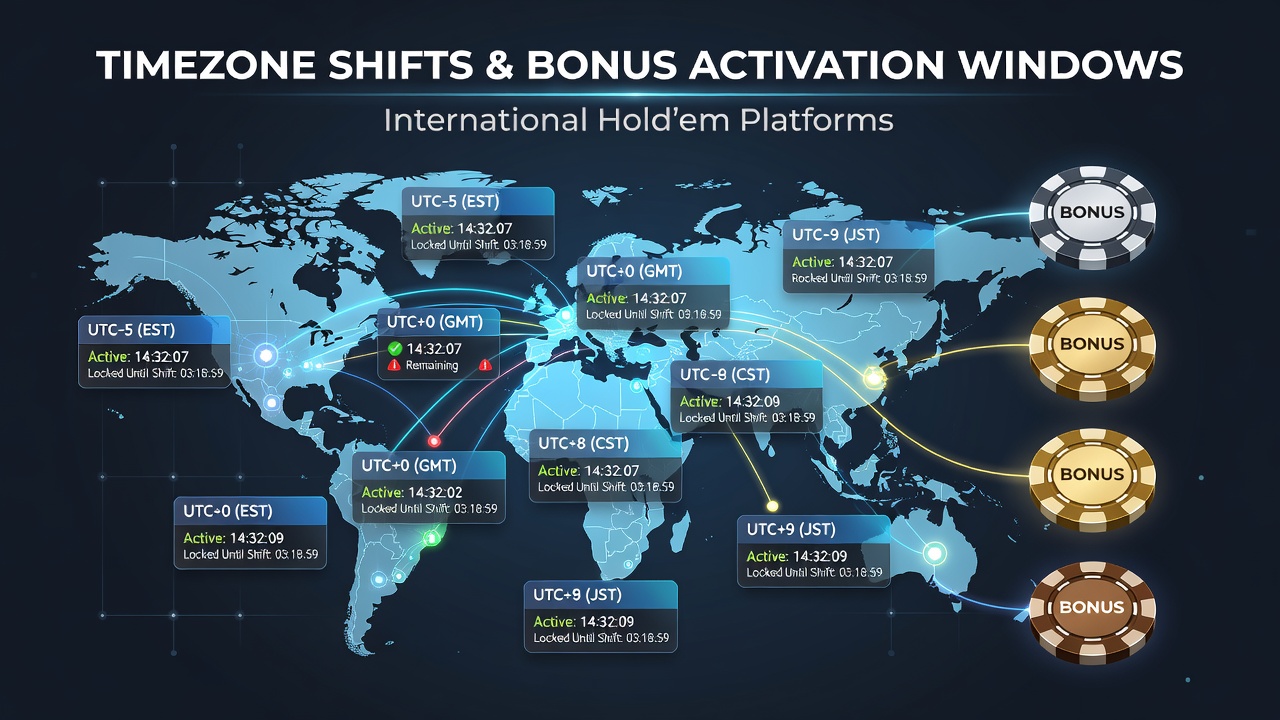
Cross-device reward chains further complicated activation for users who maintained accounts on both mobile and desktop clients. A login from one interface could register a different offset than a simultaneous session on another device and this created brief periods where the same bonus appeared active on one screen but unavailable on the second. Studies published through academic gaming research centers show that such synchronization gaps affect eligibility rates by measurable percentages when players attempt to stack multiple layered promotions within a single activation cycle.
Regulatory Context and Synchronization Standards
Gaming regulators in various jurisdictions require operators to publish clear timezone references for all time-sensitive offers and this obligation stems from consumer protection rules that address transparency around bonus terms. The Australian Communications and Media Authority has examined how differing clock standards influence player access to promotions and its reports note that clear UTC labeling helps reduce complaints filed by international participants. Similar guidelines appear in regulatory frameworks across North American and Asian markets where operators must document activation logic in player agreements so that timezone shifts do not create unintended exclusions.
Behavioral tracking tools used by platforms record session start times against the chosen reference clock and these records allow operators to identify whether a missed bonus resulted from timezone misalignment or from other factors such as account verification delays. When data shows repeated activations just outside scheduled windows analysts often trace the issue to daylight saving transitions or to players whose registered locations do not match their actual connection points.
Conclusion
Timezone management remains a core operational element for international Hold'em platforms because bonus activation windows depend on consistent reference points that span global player bases. Operators that standardize on UTC while providing conversion tools for users maintain clearer eligibility structures than those relying solely on local times. As events in July 2026 demonstrated the interaction between device logins, daylight saving adjustments, and regional offsets continues to shape how rewards reach participants across different longitudes and the patterns observed in that period align with broader data collected over previous years.