17 Jul 2026
Uncovering Ties Between Play Durations and Layered Offer Triggers in Digital Table Game Ecosystems
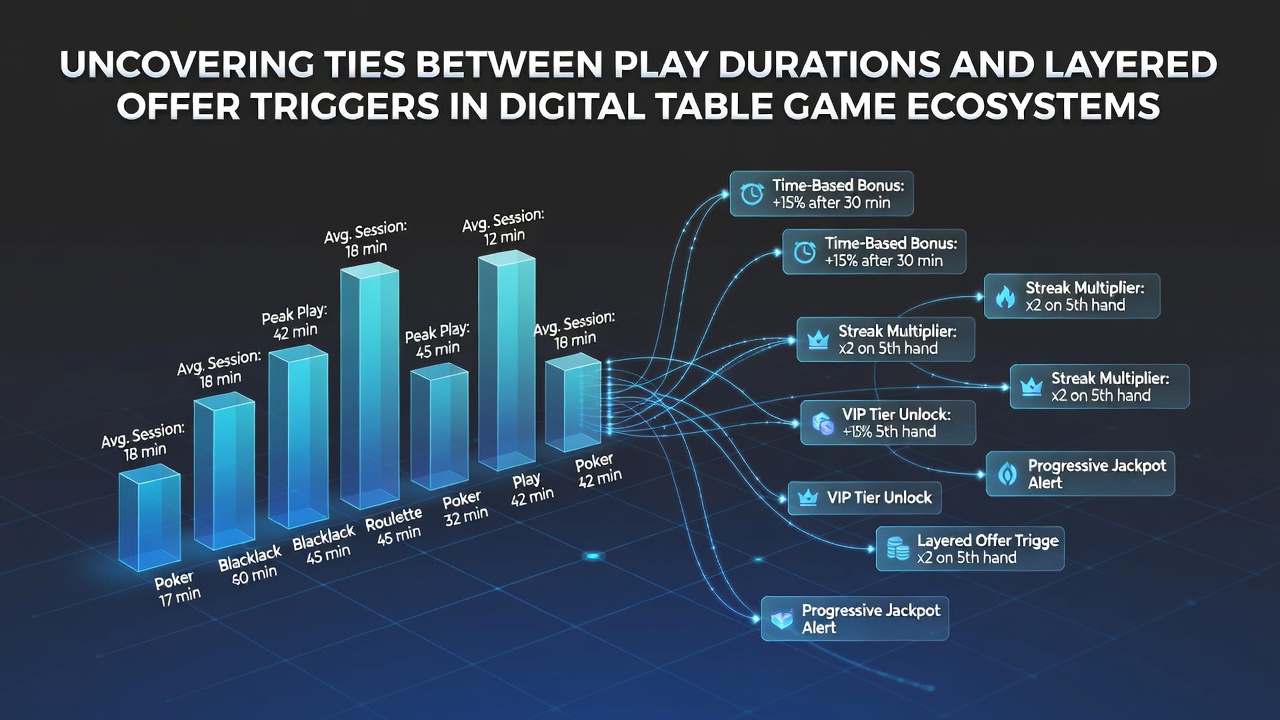 Platform operators in digital table game ecosystems collect extensive data on session lengths, and analysts continue to examine how those durations intersect with the activation sequences of promotional layers. Data from multiple jurisdictions shows that play time often serves as a primary variable in determining when users encounter successive offers, including deposit matches, free spins, and loyalty multipliers. Observers note consistent patterns where extended sessions correlate with incremental unlocks, while shorter bursts tend to trigger fewer or different incentive structures. Research from the New Jersey Division of Gaming Enforcement indicates that average session lengths in online card rooms have lengthened modestly since 2024, with many platforms reporting median durations between 45 and 90 minutes during peak evening hours. These measurements feed directly into algorithms that evaluate eligibility for layered promotions, creating feedback loops where continued play unlocks additional tiers. Operators adjust threshold values seasonally, and figures from July 2026 reveal that several major networks raised minimum play-time requirements for their highest-value reward layers by 15 to 20 percent compared with the previous year.
Mechanics of Duration Tracking
Systems log active time through a combination of server-side timestamps and client heartbeat signals, filtering out idle periods that exceed preset limits. This approach allows platforms to distinguish between genuine engagement and background tabs left open, which matters when determining whether a user has satisfied the conditions for the next promotional tier. Those who study these ecosystems observe that platforms frequently reset or carry forward accumulated time across multiple devices when users maintain consistent account authentication sequences.
Layered offers themselves operate on progressive schedules, where initial triggers might activate after 20 minutes of table time, subsequent ones after 60 minutes, and premium rewards only after sustained play exceeding two hours within a single calendar day. Data indicates that blackjack and poker tables display different sensitivity to these thresholds, with poker environments often incorporating hand-count multipliers alongside raw duration metrics.
Interconnections Across Platforms
Multi-device ecosystems introduce additional complexity because session continuity depends on seamless synchronization between mobile and desktop clients. When users switch devices mid-session, accumulated play time must transfer without resetting the offer progression meter. Analysts tracking these transitions report that platforms employing unified cloud profiles experience fewer interruptions in reward eligibility than those relying on device-specific counters.
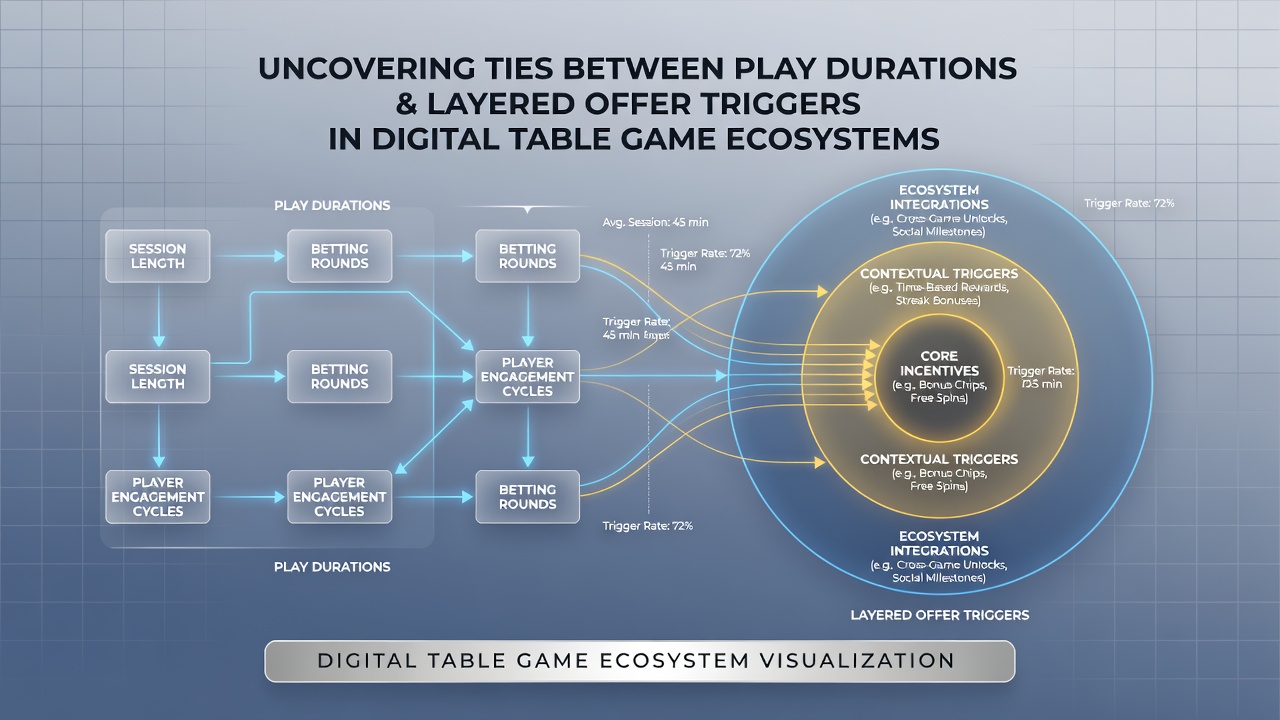
Evidence from industry reports compiled by the European Gaming and Betting Association highlights that networks integrating behavioral telemetry with duration data achieve higher retention rates during promotional windows. The same reports note regional variations, with Australian operators showing stronger correlations between play duration and jackpot-layer eligibility than their North American counterparts during comparable periods in 2026.
Observed Patterns in July 2026
During July 2026 several networks introduced time-based loyalty events that explicitly rewarded cumulative play across the month rather than isolated sessions. Participants who maintained average daily durations above 75 minutes qualified for escalating prize pools, and early participation data suggests these events influenced overall session distribution across participating platforms. Regulators in multiple jurisdictions requested additional transparency around how such events calculate qualifying time to prevent unintended clustering of play activity.
Cross-platform studies continue to map how verification sequences interact with these duration metrics. Platforms that require periodic identity checks during extended sessions sometimes pause offer progression until confirmation completes, creating measurable dips in trigger efficiency for users who encounter verification prompts mid-session. Those analyzing the data note that networks minimizing friction during these checks preserve more consistent progression toward layered rewards.
Conclusion
Connections between play durations and layered offer triggers represent a core operational feature of contemporary digital table game ecosystems. As platforms refine their measurement techniques and regulatory bodies request clearer disclosure of progression rules, the relationships between session length and promotional activation will likely remain central to both user experience design and compliance frameworks. Continued monitoring across jurisdictions will determine how these systems evolve through the remainder of 2026 and beyond.